
Can Zumba Make Knee Pain Worse?
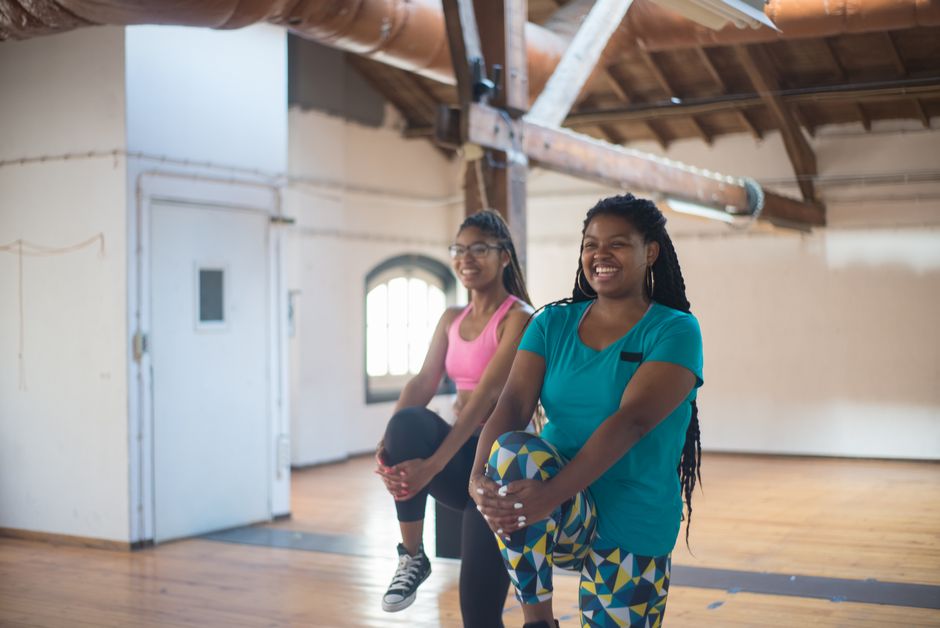
Zumba can aggravate knee discomfort, especially when fast turns, jumps, or deep bends feel painful or worsen symptoms. Modify those moves, tell the instructor, and use footwear that supports side-to-side steps without gripping during pivots. Mild soreness and persistent or severe pain are different; swelling, locking, giving way, or trouble bearing weight calls for medical assessment.
Can Zumba make knee pain worse?
Yes. Zumba’s fast pace, twisting, and repeated changes of direction can aggravate knee symptoms, though discomfort during or after class does not identify its cause.
A survey of 49 adults attending five Zumba classes in Hawai‘i reported 21 prior Zumba-related injuries among 14 participants; knees accounted for 42% of the reported injuries. Participants reporting injuries attended more classes per week on average than those without reported injuries. The study was small and used a convenience sample, so it does not establish injury rates for all participants. The survey in the Hawaii Journal of Medicine & Public Health points to a possible relationship between class frequency and injury in that sample, not a universal rule.
Harvard T.H. Chan School of Public Health notes that quick tempos and complex routines can make it harder to keep good alignment while the hips, knees, and ankles twist. Footwear and the floor matter too: a shoe that grips during a turn can make pivoting less comfortable, while a suitable studio floor supports pivoting and shock absorption. These are factors to check, not a diagnosis of why a knee hurts.
Start by noticing which movements bring on discomfort: a jump, a sharp turn, a deep bend, or the overall pace. That observation gives you and the instructor a useful way to adapt the class without assuming every ache means the same thing.
How can I modify Zumba moves to reduce knee strain?
Replace the movement that provokes symptoms with a smaller, lower-impact version, and tell the instructor before class what feels uncomfortable.
Harvard recommends taking movements at your own pace and substituting marching or step-touches for vigorous moves. The goal is to keep moving without forcing a painful range or trying to match every turn at full speed.
| Move or class factor | Lower-impact adjustment | What to watch |
|---|---|---|
| Jumps | Step one foot out at a time, or march in place. | Keep the step controlled; stop if pain rises. |
| Fast pivots | Use smaller steps to change direction instead of twisting sharply on a planted foot. | Choose a pace that lets you turn without forcing the knee. |
| Deep bends | Make the bend shallower or stay upright and use a step-touch. | Do not push into a painful range. |
| Footwear | Look for supportive, flexible dance-fitness footwear suited to lateral steps. | Running-shoe tread can grip during turns; this is not proof it causes injury. |
| Class pace and floor | Follow a slower version of the move and use a suitable studio floor when available. | Fast routines and difficult surfaces can make controlled movement harder. |
The survey authors also recommend shoes that allow stable side-to-side movement and pivoting. Harvard likewise describes flexible, supportive dance-fitness footwear as suitable for Zumba. Neither source proves that one shoe prevents knee injury. Fit and comfort during turns are more useful checks than the label alone.
Before class, tell the instructor about knee sensitivity, a recent injury, or a recovery in progress. Agree on a simple substitute, such as marching, so you do not have to improvise at the fastest point in the routine. If the floor feels sticky or turns feel forced, reduce the range and pace rather than trying to power through.
Should I stop Zumba if my knees hurt after class?
Stop or change the exercise that causes pain, and seek professional guidance if symptoms persist, worsen, or interfere with movement.
Some discomfort after activity does not reveal whether the cause is overuse, a twist, arthritis, or something else. The NHS lists overuse, overstretching, and twisting during exercise among possible causes of knee sprains and strains, while noting that knee pain has many causes. It advises a GP review if pain does not improve within a few weeks.
For knee osteoarthritis, the American Academy of Orthopaedic Surgeons says vigorous activity can flare symptoms and recommends changing activities that aggravate the condition. Its guidance describes switching from high-impact activity to lower-impact options such as swimming or cycling to stay active with less stress on the knee. A doctor or physical therapist can help shape an exercise plan around an individual’s needs.
Seek urgent advice for very severe pain, inability to move or bear weight, a badly swollen or misshapen knee, locking or giving way, or a hot, red knee with fever or chills. These signs deserve assessment; a dance class alone cannot establish a diagnosis.
When returning after a break, begin with a version of class that keeps the painful moves out: smaller steps, no jumps, and a pace that allows control. Let the instructor know you are easing back in. If pain returns or grows, stop that activity and discuss it with a clinician or physical therapist rather than treating attendance as a test of toughness.
Frequently Asked Questions
Do running shoes make knee pain worse during Zumba?
Not necessarily. Harvard and the Zumba injury survey authors note that running-shoe tread can grip the floor during turns and that running shoes favor forward motion, while Zumba includes lateral movement. The survey paper offers footwear guidance, not proof that running shoes cause knee injuries.
Is low-impact Zumba easier on the knees?
Replacing vigorous moves with marching or step-touches reduces the jumping and forceful turning in a routine. Harvard recommends these substitutions, and AAOS describes lower-impact activity as an option for reducing stress on knees affected by osteoarthritis. The right activity depends on symptoms and individual health; a clinician or physical therapist can help tailor a plan.
Sources
- A Survey of Musculoskeletal Injuries Associated with Zumba, Hawaii Journal of Medicine & Public Health
- Harvard T.H. Chan School of Public Health, The Nutrition Source: Zumba
- American Academy of Orthopaedic Surgeons, OrthoInfo: Arthritis of the Knee
- NHS: Knee Pain
Disclaimer: This article is for general information only and is not medical advice. It is not a substitute for diagnosis or treatment by a qualified healthcare professional. Always speak to your doctor before acting on anything you read here.
How Can Older Adults Improve Balance and Exercise Safely?
Learn supported balance drills, how often to practice, safe ways to progress, and when symptoms call for medical guidance.
Can You Preserve Muscle While Taking Wegovy or Zepbound?
What research says about lean-mass loss on semaglutide and tirzepatide, plus strength-training and protein strategies to discuss with your care team.