
What Do Electronic Engineering Courses Cover?
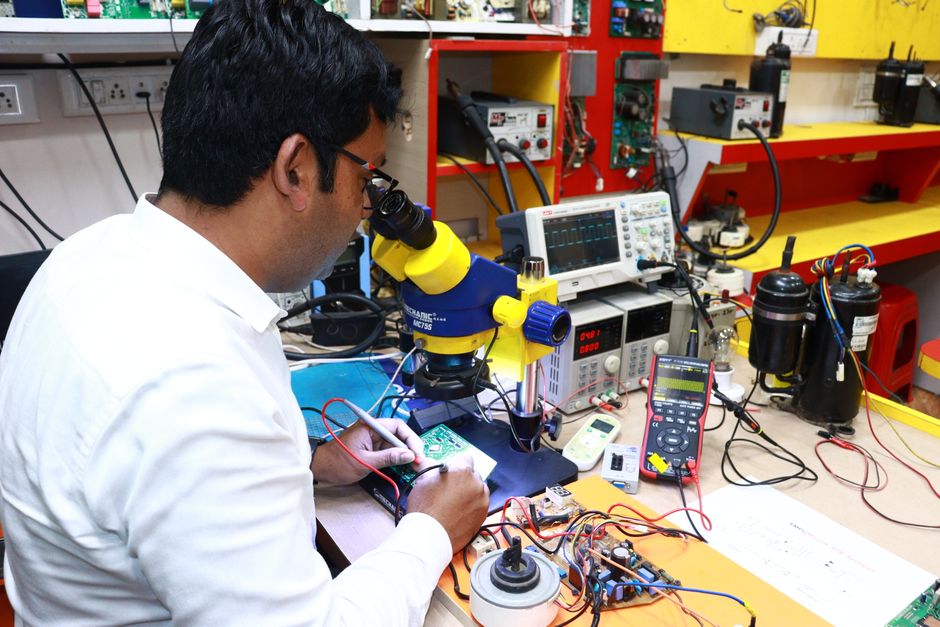
Electronic engineering courses combine mathematics and physical science with circuits, electronics, programming, signals, and systems. Early study builds core skills; later courses add advanced topics, design projects, and specialist options such as communications, microelectronics, or robotics. Expect calculus and physics alongside practical laboratory work, with the exact sequence and choice of electives varying by university.
What subjects do you study in electronic engineering courses?
Electronic engineering courses typically move from maths, physics, and programming into circuits, systems, and focused engineering subjects. The exact route differs by institution, so a degree title alone does not tell you which topics receive the most attention.
First-year foundations commonly include calculus, linear algebra, physics, and programming. Maynooth University’s indicative module list also includes systems and control and robotics project work in the first year. These foundations provide tools used later to model circuits, process signals, and work with engineered systems.
Later study layers in analogue electronics, digital systems, telecommunications, and more advanced mathematics. Maynooth lists embedded systems, digital signal processing, modulation and coding, and Verilog among its third-year modules. HKUST’s 2025–26 plan includes communications, signals and systems, computer organization and design, electronic circuits, and electro-robot design.
The sequence has a practical logic: foundational maths and science support analysis, while programming and circuit work let students apply those tools. MIT’s curriculum moves from foundations in circuits, electronics, electromagnetics, software development, and signals and systems to advanced subjects in specialist areas. It describes specialist fields including microelectronic devices and circuits, communication, control and signal processing, bioelectrical engineering, and computer systems engineering.
Some degrees join electronics with computing or give more room to a specialist track. ABET’s criteria describe engineering topics for complex devices and systems containing hardware and software, but do not set a universal sequence. Maynooth also states that its listed modules are indicative and subject to change. Compare actual module plans, including electives and projects, as you choose an engineering university for accreditation, flexibility, and cost.
How much calculus and physics do electronic engineering courses require?
Electronic engineering courses require sustained mathematics, including calculus, alongside physics and other basic sciences. The depth depends on the degree plan, but these subjects are central foundations rather than optional extras.
For accredited baccalaureate engineering programs, ABET requires at least 30 semester credit hours or equivalent in college-level mathematics and basic sciences, including experimental experience. Its electrical and electronic engineering criteria specify probability and statistics, mathematics through differential and integral calculus, physical science, and engineering topics needed to analyze and design complex devices and systems.
Advanced maths continues beyond introductory calculus. ABET says programs with “electrical,” “electronic(s),” “communication(s),” or “telecommunication(s)” in the title must include advanced mathematics such as differential equations, linear algebra, complex variables, and discrete mathematics. In practice, these subjects connect mathematical reasoning with signals, control, circuits, and communication systems.
HKUST’s 2025–26 plan illustrates how these requirements can appear in a degree: it lists Calculus I and II or an accelerated option, multivariable calculus, linear algebra, differential equations, probability, and physics courses. Maynooth’s indicative modules also include differential and integral calculus, linear algebra, physics for engineers, and later differential equations and transform methods. These examples show a progression, not a single course template.
When comparing programs, look beyond the first-year maths list. Check how later modules use those foundations, and whether the plan includes both theoretical work and experimental science. ABET sets curriculum areas and outcomes, not a fixed ordering of courses; universities shape the sequence and breadth of their programs.
Do electronic engineering courses include practical labs and circuit-building?
Yes. Electronic engineering courses include practical learning through laboratories, projects, and design work, though the format and amount vary by program.
ABET’s requirement for mathematics and basic sciences includes experimental experience. MIT describes laboratory subjects, teamwork, independent projects, and research as ways students engage with analysis, design, and experimentation. This practical work connects concepts to the choices engineers make when designing or testing systems.
Project work can build in complexity as students advance. Maynooth lists first-year robotics and control project work, followed by project-based electronics and control work in the second year and further projects in later study. HKUST’s degree plan includes a six-credit final-year design project or thesis, alongside industrial experience and a co-op option.
Programs can differ in how they combine hands-on practice with theory. A laboratory may focus on measurement and experimentation; a design project asks students to bring multiple skills together. When hardware design is a goal, examine the named electronics and circuits modules, lab requirements, and capstone projects rather than relying only on a broad course title.
Frequently Asked Questions
What is the difference between electronic engineering and electrical engineering courses?
The names can overlap, and the title alone does not define the curriculum. ABET’s criteria group electrical and electronic engineering program requirements around mathematics, physical science, and engineering topics for complex devices and systems containing hardware and software. Compare each university’s modules to see its emphasis.
When can students specialize in areas like communications, microelectronics, or robotics?
Specialist study often follows foundation subjects, but the timing and available options depend on the university and program. MIT describes advanced subjects in specialist areas after foundation study, while Maynooth lists later-year options in communications, control, and robotics.
Will an electronic engineering course prepare me for hardware design jobs?
A course can build relevant skills through circuits, electronics, systems analysis, laboratories, and design projects. Check for substantial practical work and advanced hardware options: HKUST, for example, lists electronic circuits and a six-credit final-year design project.
Sources
What Is the Electrical Engineering Degree Online Cost?
Online electrical engineering degree cost depends on credits, tuition, fees, materials, residency, transfer credits, and aid.
How Do I Start Learning Electrical Engineering?
Refresh core math, learn circuit laws, then pair each concept with a safe experiment and a focused project.

Choose an Engineering University for Accreditation, Flexibility, and Cost
Compare engineering programs by accreditation, net price, curriculum flexibility, hands-on learning, and the details schools publish about career outcomes.

Compare East Coast Boarding Schools by Cost, Aid, and Fit
Compare East Coast boarding schools by published cost, financial aid, academics, location, and student support.