
How Do You Compare Electrical Engineering Courses Online?
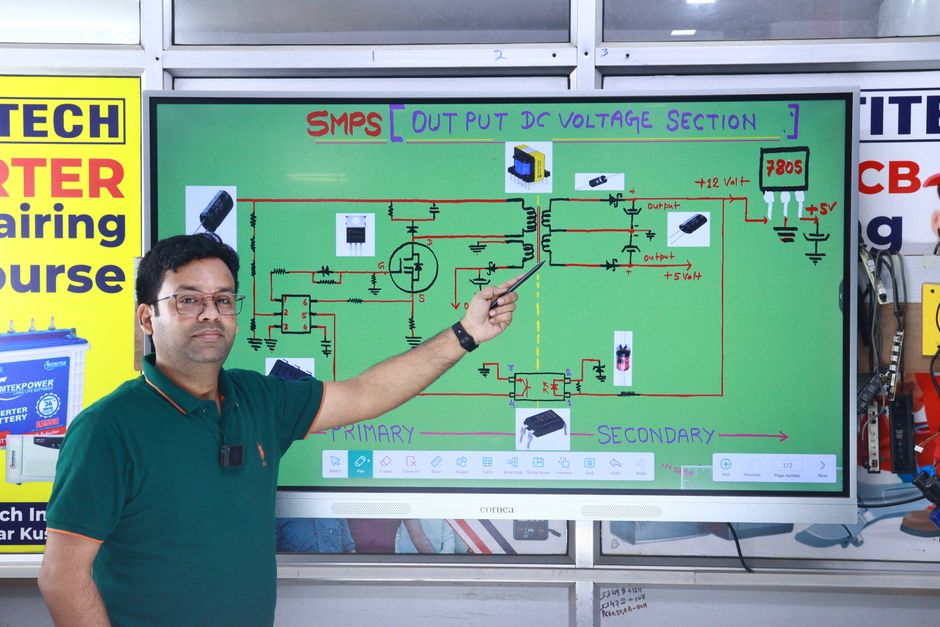
Compare electrical engineering courses online by matching their level and prerequisites to your goal, then checking lab access, assessment, instructor support, total cost, and what the credential actually represents. Free materials can support independent study, while academic credit and accredited degrees require separate verification. Choose a course with evidence of learning you can show, not just a certificate label.
Which electrical engineering courses online are suitable for beginners?
Beginner-friendly electrical engineering courses online state their assumed knowledge clearly and build from core ideas such as circuit laws and components. Start by deciding whether you want a guided introduction to electronics, a broad independent-study course, or the first course in a university-level sequence.
MIT OpenCourseWare's 6.01SC syllabus says there are no formal prerequisites, but recommends some trigonometry, linear equations, and basic circuit exposure, including Ohm's law and passive components. It says extensive calculus is not required. The materials include videos, exercises, homework, quizzes, exams, and software and design labs, giving independent learners several ways to check understanding.
For a narrower electronics introduction, Georgia Tech describes its Introduction to Electronics as intended for learners with little background in MOSFETs, diodes, op amps, or transistors; basic electrical laws are beneficial. Its listed topics include op-amp circuits, filter transfer functions, diodes, MOSFETs, and bipolar junction transistors. Compare that focused scope with MIT 6.002, which MIT describes as a first course in an undergraduate EE or EECS curriculum and which covers resistive networks, amplifiers, transistors, energy-storage elements, and circuit dynamics.
Can I learn electrical engineering online without a degree?
You can learn many electrical engineering concepts online without enrolling in a degree, but learning material and becoming qualified for an engineering job are different goals. A course can build knowledge; it does not automatically provide academic credit, a degree, or the credential employers expect.
The Bureau of Labor Statistics says electrical and electronics engineers typically need at least a bachelor's degree in a related engineering field. It also notes that employers value practical experience such as internships or cooperative programs. That distinction matters when you compare a short course with a degree pathway: ask whether you need knowledge for a current role, preparation for further study, or a formal engineering qualification.
Use a simple credential check before enrolling: identify the exact award, confirm whether it carries academic credit, and verify whether a named degree program is accredited. For degree pathways, this guide to choosing an online electrical engineering bachelor's degree can help frame the questions about program fit. A course completion certificate records completion; it does not turn the course into an accredited degree.
Do online electrical engineering courses include hands-on labs?
Some online electrical engineering courses include lab exercises or simulations, but the label “online” alone does not tell you what practical work you can complete. Check the syllabus for the activity, access method, required equipment or software, grading, and feedback.
MIT 6.002 lists design and lab exercises alongside problem sets, exams, and lecture videos. MIT 6.01SC includes software and design labs, but its syllabus notes that the online tutor used by MIT students is not included in the OpenCourseWare version. That is a practical difference: course materials may be available for independent work even when a support tool or guided environment is not.
Before paying, look for concrete evidence of learning: graded assignments, design tasks, lab reports, exam materials, or a project you can explain. The Georgia Tech electronics course on Coursera lists seven modules and 70 assignments, with an estimated five weeks at 10 hours per week. Those figures give you a workload comparison point; confirm the current enrollment option, grading access, and certificate terms on the course page.
Are free online electrical engineering courses worth taking?
Free online electrical engineering courses are worth considering when their materials match your goal and you can work independently, but “free” does not guarantee feedback, equipment, or a credential. Assess the learning resources and any extra costs before treating a course as a complete training package.
MIT OpenCourseWare lists the content for 6.002 as freely available, including lecture videos, problem sets, exams, and design and lab exercises. The course also requires a textbook, so include materials in your cost comparison. Open materials can be a strong fit for self-directed study; they may be a weaker fit if you need a tutor, graded feedback, or a formal certificate.
Compare options using this checklist. Record the details in one place so that a low headline price does not hide a missing lab, support feature, or assessment.
| What to compare | Question to ask | Why it matters |
|---|---|---|
| Level and prerequisites | What knowledge does the syllabus assume? | A mismatch can make the course too basic or difficult to follow. |
| Labs and tools | Are labs, simulations, software, and equipment included? | Materials may be available without every learning tool or support feature. |
| Assessment | Are assignments, exams, or projects available and graded? | Assessment helps you check learning and show what you can do. |
| Total cost | Are there textbook, enrollment, or certificate costs? | Compare the full cost, not only a free or introductory listing. |
| Credential | Is the outcome a completion certificate, academic credit, or an accredited degree? | These awards serve different purposes and are not interchangeable. |
| Schedule and support | What workload is estimated, and what instructor or tutor access is included? | Fit the course to the time and help you can realistically access. |
For a paid option, Coursera's Georgia Tech course page lists its workload and assessments, but says access and certificate arrangements depend on the enrollment option. Check the current price and exactly what your selected option includes. Then compare it with the freely available MIT materials: the better choice depends on whether you need structured assessment and a certificate, or can work through course materials on your own.
Frequently Asked Questions
Will an online course certificate help me get an engineering job?
A certificate can document course completion, but it is not the same as an engineering degree or proof of academic credit. The Bureau of Labor Statistics says electrical and electronics engineers typically need at least a bachelor's degree in a related field, and employers value practical experience such as internships or cooperative programs. Treat a certificate as evidence of additional learning, not as a substitute for those qualifications.
How can I tell whether an online electrical engineering course is accredited?
First clarify whether you are checking a course or a degree program: ABET accredits eligible postsecondary degree programs, not individual courses or certificates. Search ABET's program listings for the specific program and confirm the delivery details; ABET says online, hybrid, and on-campus programs are evaluated against the same criteria. A provider's general institutional status does not establish that a particular program is accredited.
What math and physics should I know before taking an online circuits course?
Start with the course syllabus rather than assuming every circuits course has the same entry requirements. MIT's 6.01SC syllabus lists no formal prerequisites but recommends some trigonometry, linear equations, and basic circuit exposure such as Ohm's law and passive components; it says extensive calculus is not required. MIT's 6.002 is positioned as a first undergraduate EE or EECS course, so check its materials and problem sets to judge whether its level fits your preparation.
Sources
- MIT OpenCourseWare — Introduction to Electrical Engineering and Computer Science I (6.01SC) syllabus
- Georgia Tech Professional Education — Introduction to Electronics
- MIT OpenCourseWare — Circuits and Electronics (6.002)
- U.S. Bureau of Labor Statistics — Electrical and Electronics Engineers
- Coursera — Introduction to Electronics (Georgia Tech)
- ABET — Program Eligibility Requirements
- ABET — Find Programs

Which Online Electronic Engineering Courses Fit Your Goals?
Choose online electronic engineering courses by comparing credentials, lab access, prerequisites, support, and costs against your goal.
How Do You Choose an Electrical Engineering Bachelors Degree Online?
Compare accreditation, labs, transfer credits, total cost, and course schedules before choosing an online electrical engineering bachelor's degree.
What Is the Electrical Engineering Degree Online Cost?
Online electrical engineering degree cost depends on credits, tuition, fees, materials, residency, transfer credits, and aid.

Compare East Coast Boarding Schools by Cost, Aid, and Fit
Compare East Coast boarding schools by published cost, financial aid, academics, location, and student support.